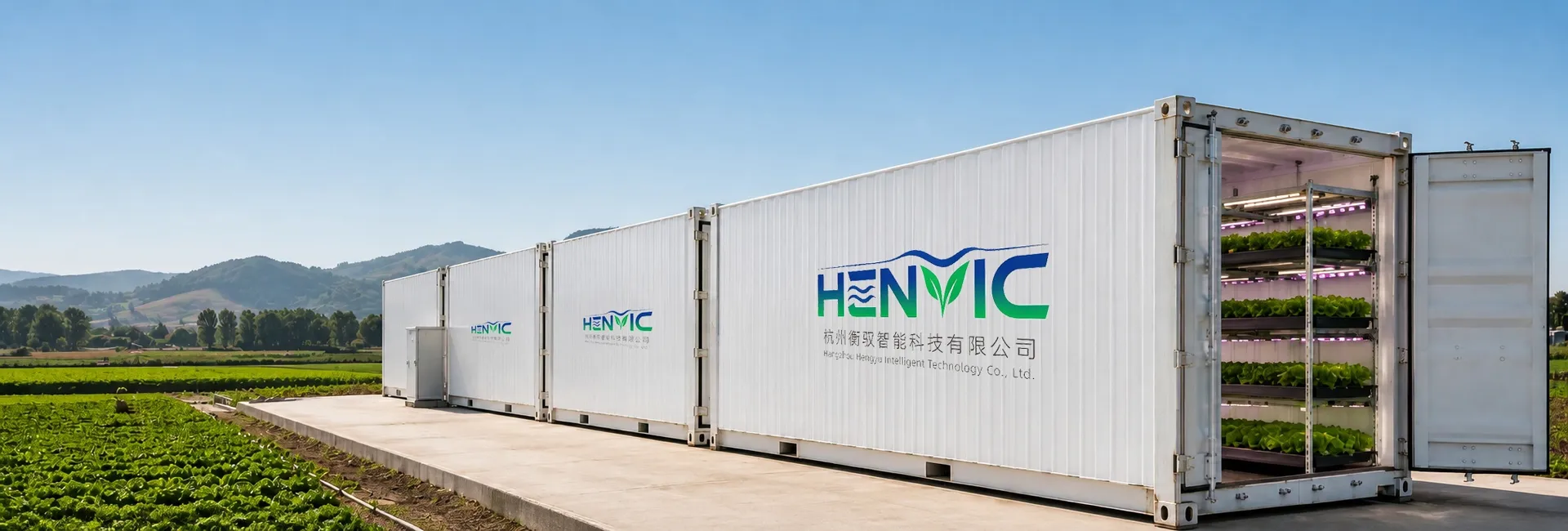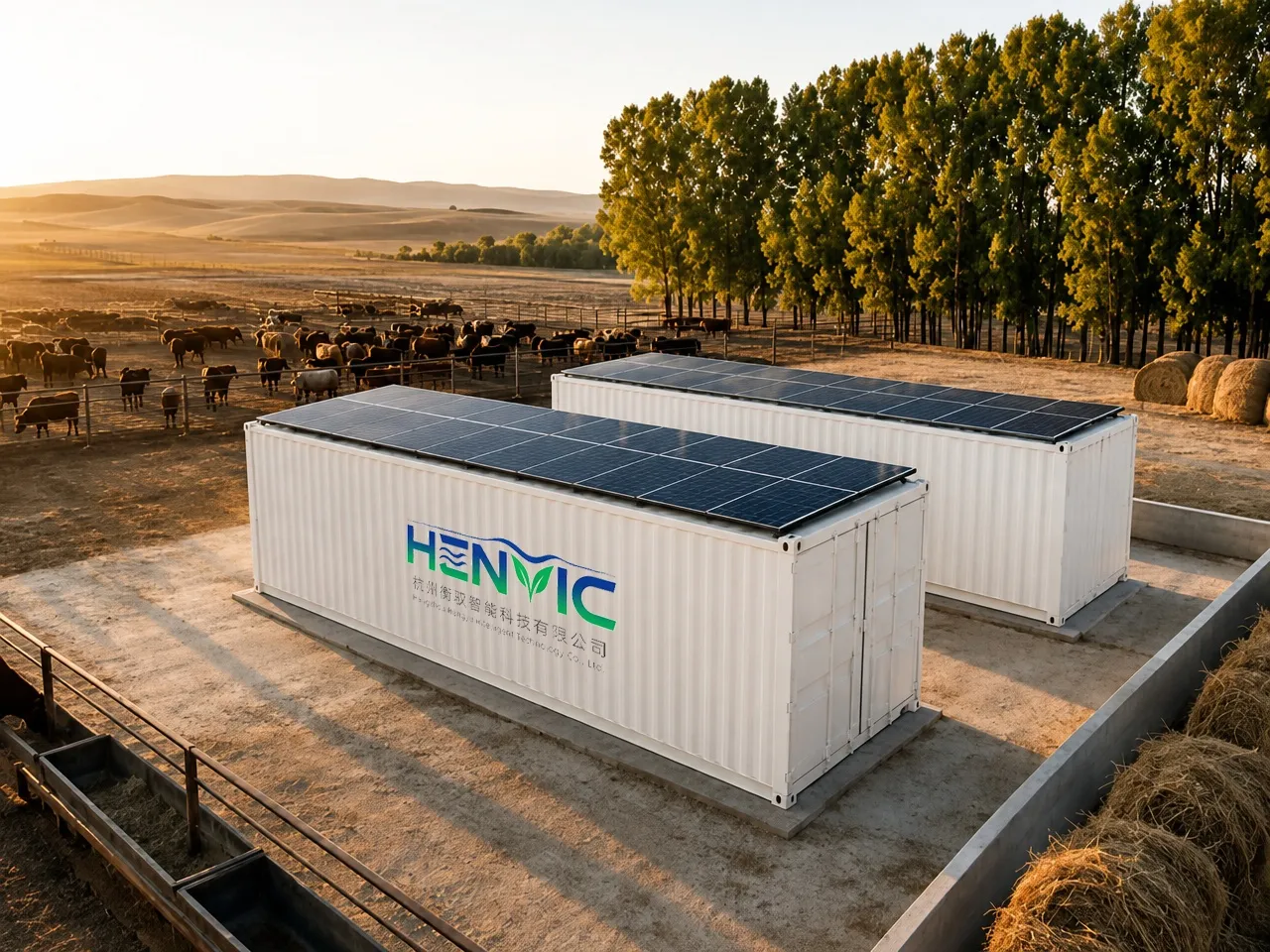
Ask a container farm operator what the hardest variable is, and most will say power. Not the lights, not the nutrients, not the harvest timing. Power. In a sealed environment there is no free sunlight to fall on the canopy, and no ambient breeze to carry heat away. Every photon the plant uses is paid for, and every photon that misses the plant still has to be removed as heat. The result is that a container farm is, functionally, an electrical facility that happens to contain plants.
The energy story has four main chapters, and they compound. Lighting is the first and most visible: to replace the sun at even a modest daily light integral for leafy greens, you are running hundreds of watts of LED per square meter for sixteen or eighteen hours a day, and every one of those watts eventually becomes heat inside the box. Cooling is the second: that heat, plus the heat from pumps and fans and dehumidification, has to be moved out through a refrigeration system whose coefficient of performance at low indoor temperatures is nothing like the nameplate COP you see on a domestic air conditioner. Dehumidification is the third, and it is easy to underestimate: transpiration from a mature canopy adds a large latent load, and pulling water vapor out by cooling a coil below its dew point is one of the largest single draws in the system. Pumps, fans, controls, and the inevitable parasitic loads make up the fourth.
Industry-reported figures for leafy greens commonly land around ten to twenty kilowatt-hours per kilogram of harvested product, though the range is wide and dependably inflated by climate, crop choice, and how aggressively the operator runs the lights. In a hot, humid climate, the cooling and dehumidification load can rival or exceed the lighting load. In a cool, dry climate, lighting dominates and the cooling system gets something of a free ride. Same equipment, radically different power bills.
This is why siting decisions in container agriculture are not primarily about customers and land. They are about electricity: the tariff structure, the time-of-use rates, the carbon intensity, and whether there is any on-site generation. Two identical container farms, one in a jurisdiction with cheap off-peak hydro and one paying peak summer rates, are not the same business even if the harvest looks the same. The operator who treats power as an afterthought will lose to the one who treats the power bill as the primary design constraint.
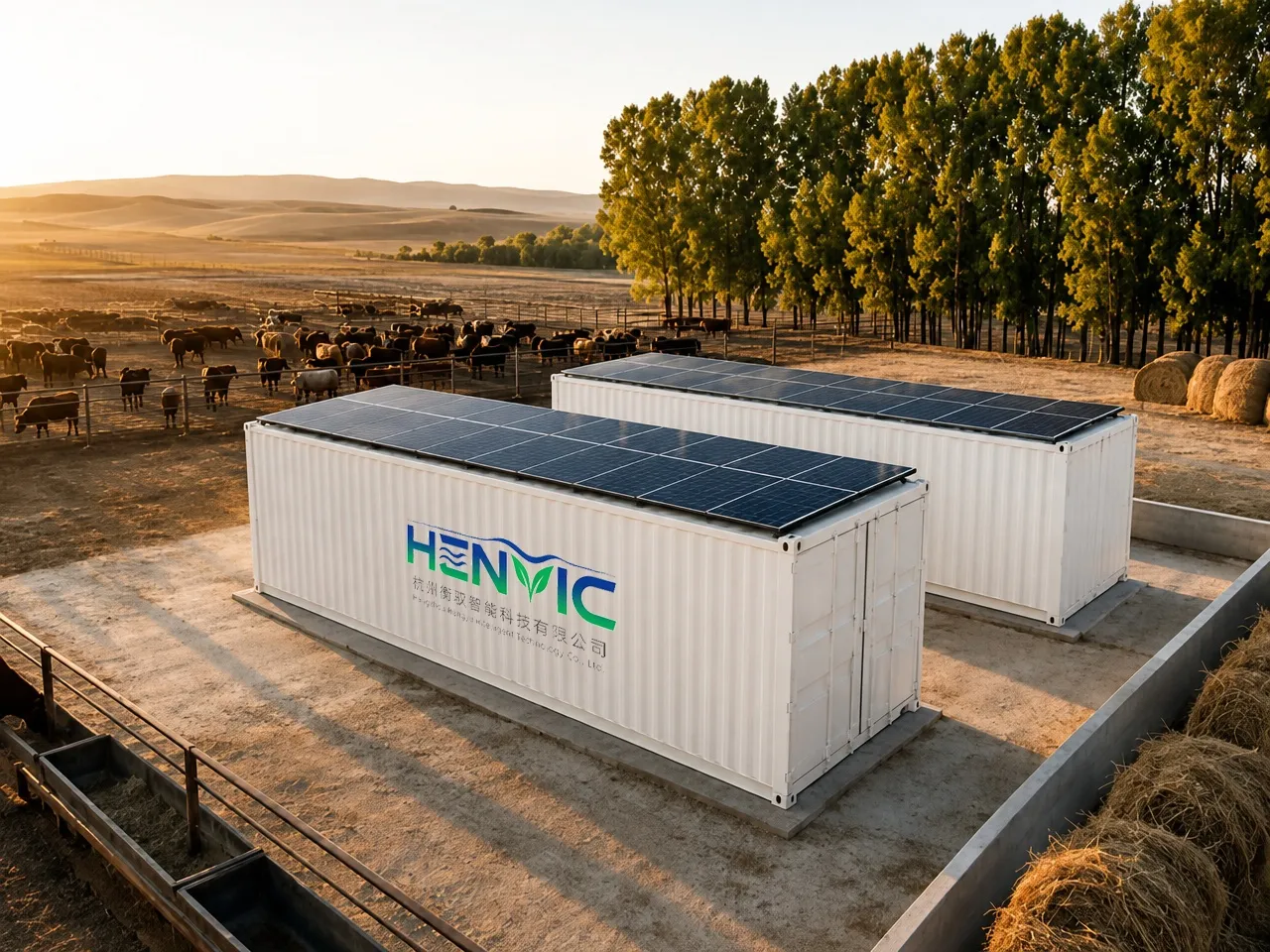
There are several levers, and none of them is a silver bullet. The first is scheduling: shifting the photoperiod into off-peak hours cuts the effective cost of both lighting and the extra cooling load it creates, at the price of accepting whatever temperature the night-time environment imposes. The second is efficiency: LED efficacy continues to improve, and a two or three percent annual gain in lumens per watt compounds. The third is system integration — using the waste heat the lights throw off to pre-warm something, or recovering condenser heat for a hot-water need elsewhere on site. The fourth, and increasingly common, is renewable generation and storage on the same property, which helps most when the grid is expensive and the load can be shifted to match production.
There is a deeper lever that gets less attention: choosing crops whose value per kilowatt-hour justifies the indoor process. Leafy greens and culinary herbs clear the bar; microgreens clear it comfortably; specialty mushrooms, which want the dark and the humidity anyway, clear it with a different logic entirely. Calorie crops do not clear it, and no plausible improvement in LED efficiency will make them clear it, because their daily light integral requirement is simply too high. The economics are not a technology problem to be solved. They are a crop-selection problem to be respected.
It is worth resisting the temptation to celebrate a low kilowatt-hour-per-kilogram figure as if it were a moral good in itself. The number that actually matters is the margin between the power bill and the sale price, and that margin depends heavily on what you grow and where you sell it. A container farm producing premium herbs for high-end restaurants at a country's lowest off-peak rate can be profitable at fifteen kilowatt-hours per kilogram. A container farm producing a commodity crop at that same efficiency, sold into a wholesale market, will not be profitable at any realistic efficiency.
The upshot is that container agriculture is best understood as a way of converting electricity into premium produce with a great deal of control. The control is real, and it is worth paying for in the right markets. But the energy bill is not an overhead you trim after the fact; it is the substrate of the entire business model. Operators who design for it from day one — choosing climate, crop, tariff, and hardware together — build farms that survive. Operators who bolt a container onto a site and hope the numbers work will find that the kilowatts, not the plants, are what they are actually growing.