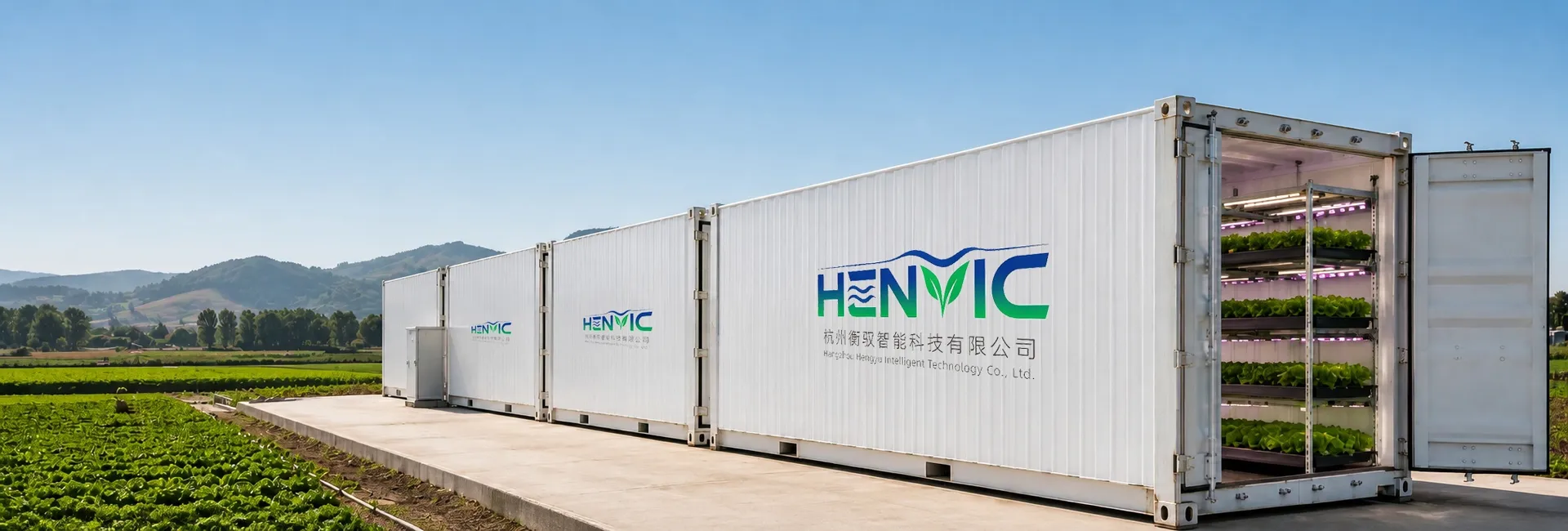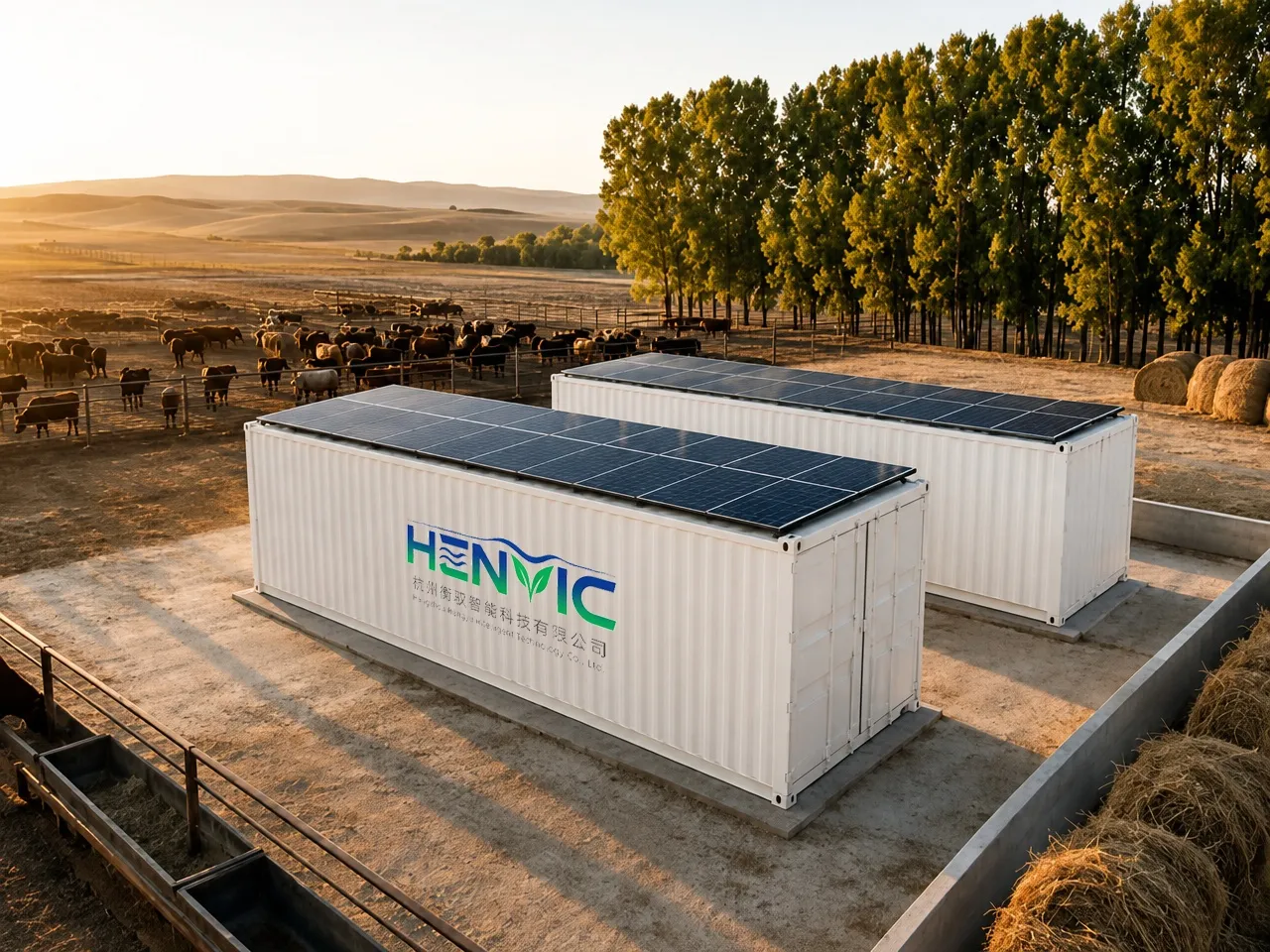
Every design conversation about container farming begins with photons. A leafy-green unit is, in essence, a light-delivery machine that happens to sit in a box: lighting dominates capital cost, dominates electricity consumption, and drives the cooling load through the heat it deposits in the canopy. Invert the crop and the entire logic inverts with it. A container configured for mushrooms carries no meaningful lighting load at all, and its governing cost is not illumination but respiration — oxygen consumed, carbon dioxide released, water vapour expelled into a sealed volume. The result is a facility that resembles a plant factory from the outside and behaves like an incubation chamber from the inside.
Heterotrophy and What It Removes
Mushrooms do not photosynthesise. The mycelium secretes enzymes that break down lignocellulosic substrate, absorbs the resulting sugars, and generates energy through aerobic respiration. No photosynthetic photon flux needs to be purchased, no quantum sensor needs to confirm uniformity, and no dimming schedule needs to be tuned for morphology. The largest energy line item in a plant container farm simply does not exist here.
That said, "no light" is a statement with an asterisk. In species such as oyster and shiitake, primordia formation responds to the presence of diffuse light in the low hundreds of lux, and continuous darkness yields pale, elongated, poorly differentiated fruiting bodies. Light functions as a developmental signal rather than an energy source, so the lighting system in a mushroom container is a handful of low-output fixtures costing almost nothing to specify and almost nothing to run. Button mushrooms will fruit quite happily in complete darkness. The point is not that light is irrelevant; it is that light is no longer the design axis.
What the Box Actually Provides
The value of a container is not agronomy — it is standardisation. A forty-foot high-cube gives roughly sixty-seven cubic metres of internal volume, an insulated shell with a vapour barrier and washable lining, a controlled atmosphere, and a footprint that can be sited next to a distribution centre, inside a cold store, or on a brownfield plot. For mushrooms specifically, three properties matter.
The first is isolation. A wood or concrete growing house accumulates spores, debris and fungal competitors in its structure over years. A steel box with smooth, sealed internal surfaces can be emptied, washed and chemically reset between cycles. The second is control. Mushroom cultivation demands parameter bands — carbon dioxide, humidity, temperature — that are much narrower than those of leafy greens, and a container can hold them because the volume is small and the envelope is tight. The third is repeatability. A design validated in one unit can be replicated in another with confidence, which is what makes the mushroom container an engineering artefact rather than a craft.
The Four Phases and Their Setpoints
Cultivation inside the box runs through distinct stages, each with its own atmosphere.
Spawn run, or colonisation, is the warmest and most forgiving. Substrate bags or bottles are held in darkness at roughly 22 to 25 degrees Celsius for two to four weeks while the mycelium spreads through the block. Carbon dioxide concentrations in the thousands of parts per million are tolerated, even beneficial, because the organism is not yet fruiting and elevated CO2 suppresses premature pinning. Humidity is maintained but not saturated.
Primordia induction then delivers the environmental shock that triggers reproduction: a temperature drop of several degrees, humidity raised to 85 to 95 per cent, carbon dioxide driven down below roughly 1,000 parts per million, and a weak light signal. This transition is abrupt by design. A gradual change simply produces vegetative growth rather than pins.
Fruiting follows at 14 to 18 degrees Celsius with continued high humidity and vigorous fresh-air exchange. Demand for oxygen and for CO2 removal peaks here, because this is when the biomass is most metabolically active and the fruiting bodies are expanding rapidly.
Harvest is manual in almost every container operation, and it is the single largest labour input. It also establishes the throughput rhythm of the facility, because a mushroom flush does not arrive on a production planner's schedule.
The Governing Variable
If one number had to represent a mushroom container, it would be carbon dioxide concentration. Mushrooms respire intensely. A block of fruiting oyster mushrooms releases measurable heat around the clock, and every kilogram of metabolised dry matter produces a large volume of CO2. In a sealed box, that gas accumulates quickly, and its concentration governs morphology more directly than temperature does. Above roughly 1,000 to 2,000 parts per million, stipes elongate and caps stay small and thin, producing the pale, long-stemmed appearance growers call "stretched" fruit.
Enoki cultivation exploits this deliberately, holding elevated CO2 to build the long, slender stems the market expects. For most other species the target is the opposite: a low concentration achieved through substantial continuous fresh-air exchange. This is the essential difference from a plant container farm, where CO2 is managed upward as an enrichment input. Here it is a waste product that must be flushed.
The Dehumidification Paradox
The second defining feature is the conflict between cooling and humidification. A cooling coil removes heat and, unavoidably, condenses water out of the airstream. That is precisely how a leafy-green unit controls humidity. A mushroom house requires the opposite: relative humidity held at 85 to 90 per cent while the coil is running hard to remove respiratory heat. The two requirements pull against each other.
Practical resolutions fall into two families. The first is sequential: cool with a coil, then reheat slightly to restore the air's moisture-holding capacity, then add moisture back through ultrasonic or high-pressure fogging nozzles. The second is functional separation: use a dry cooling surface for sensible heat and an independent humidification system for moisture, so that the two loops do not fight. Either way, the environmental plant in a mushroom container is more elaborate than in a leafy-green unit, not less, and the control loop must hold vapour pressure deficit at a very low value rather than chasing a temperature setpoint.
Substrate and Labour Sit Outside the Box
The container solves the fruiting stage and nothing else. Substrate preparation — mixing, bagging, sterilisation at 121 degrees Celsius, inoculation under sterile conditions — occupies a separate facility and is capital-intensive and skill-dependent. Biological efficiency, the kilograms of fresh mushrooms harvested per kilogram of dry substrate, typically falls between 50 and 100 per cent depending on species and technique, and it is the metric that determines viability.
Harvesting, grading and packing remain manual: mushrooms bruise, grow in clusters, and must be cut by hand at the right instant. Labour per kilogram is therefore substantially higher than in a leafy-green container, which is the opposite of what the absence of a lighting bill would suggest. The box removes one major cost and concentrates attention on two others.
Where the Design Lands
A mushroom container is not a plant factory with the lamps removed. It is a respiration-management device in which the controlling variables are carbon dioxide, humidity and contamination pressure, and in which success depends on how precisely those three can be held inside narrow bands while fresh air is continuously forced through. Its engineering is quieter than a vertical farm's — and considerably less forgiving.