Introduction
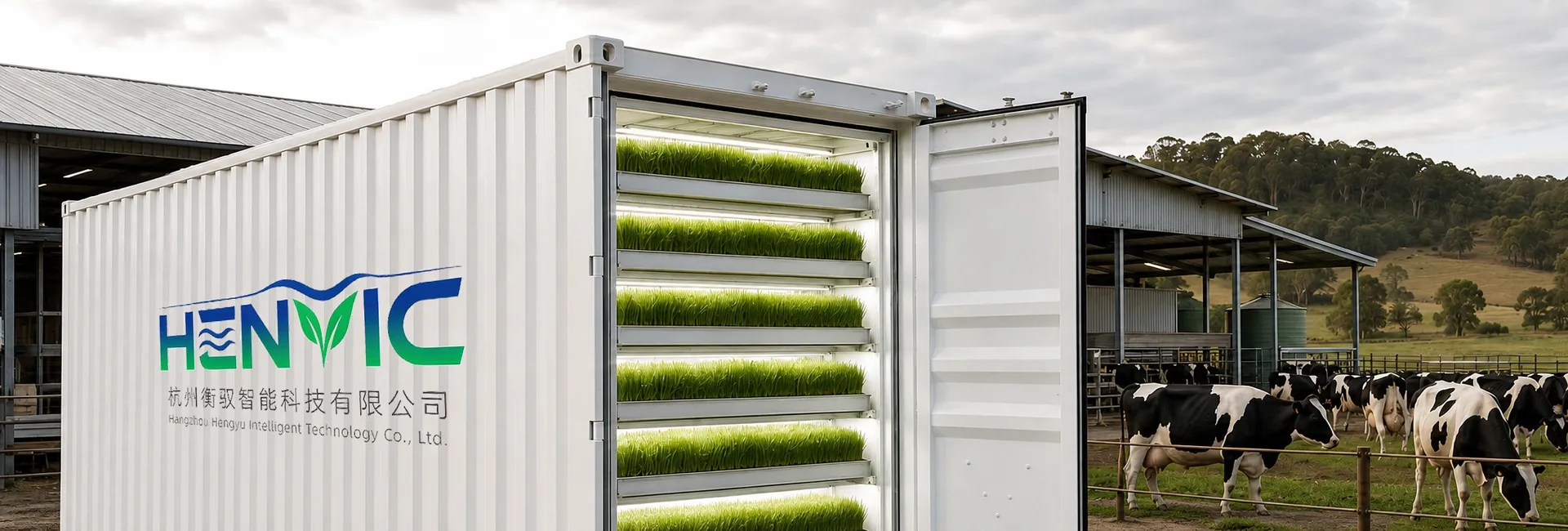
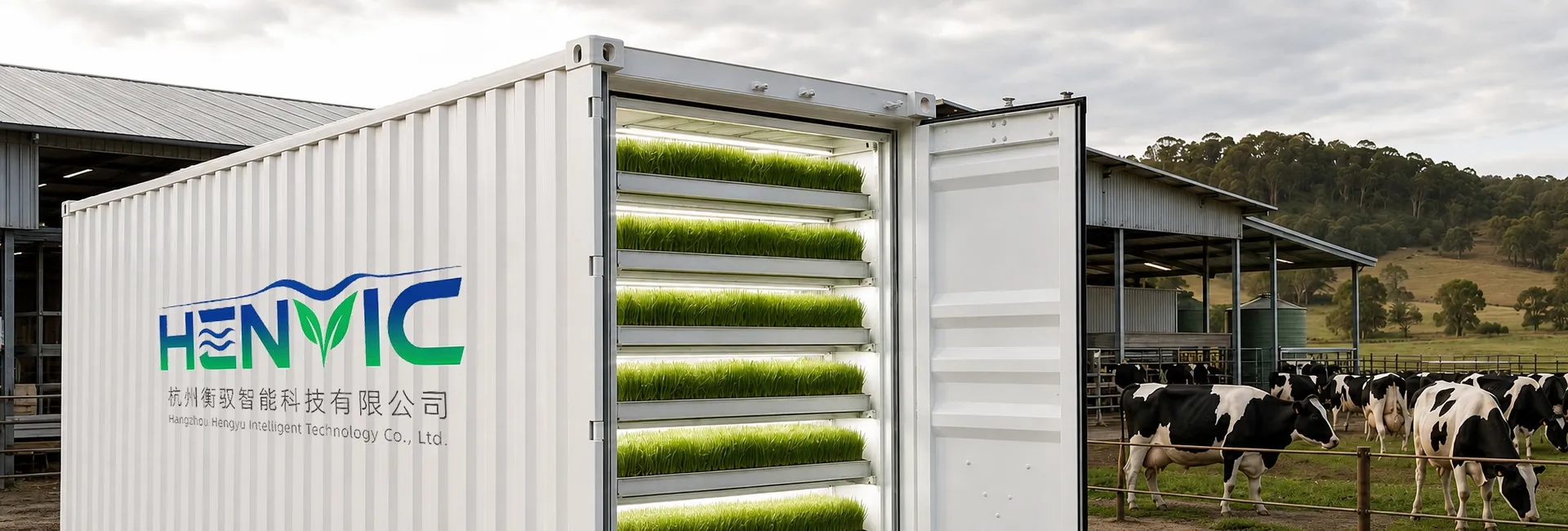
A container farm is a fully enclosed agricultural production unit built inside a modified shipping container — typically 40 feet (12 m) long by 8 feet (2.4 m) wide — in which crops are grown hydroponically under artificial light. Leafy greens are the flagship crop of this model: lettuce, kale, arugula, spinach, basil, pak choi, Swiss chard, and various microgreens. Because the container is a sealed, climate-controlled environment, an operator can produce clean, pesticide-free greens in a warehouse district, a parking lot, a desert, or an Arctic settlement with the same reproducible protocol.
This article covers the technology stack of container-based leafy green production: the physical envelope, the hydroponic growing system, LED lighting, climate and nutrient control, automation, and the economics that decide whether a unit is viable.
Why Leafy Greens Dominate Container Farming
Leafy greens and container agriculture are a natural pairing for several reasons.
Short cycle time. Most lettuce varieties reach harvest in 28–35 days from transplant, allowing 10–12 turns per year in the same footprint.
Low profile, high density. Greens need little vertical clearance, so multi-tier racking multiplies the growing area several times over the container's floor space — a 320-square-foot container may present 1,000–2,000 square feet of actual growing surface.
High retail value, short shelf life. Fresh greens are perishable and comparatively expensive per kilogram, which makes local, on-demand production economically attractive.
Agronomic simplicity. Leafy greens are undemanding compared with fruiting crops: they need no pollination, no trellising, and modest light intensity.
The Container Envelope
The physical shell is a standard ISO container retrofitted for cultivation:
• Insulated walls and ceiling — typically 50–100 mm of polyurethane or PIR foam — to hold temperature with minimal energy input.
• Airtight, vapor-sealed interior with sealed penetrations for power, water, drainage, and data.
• A food-grade floor with drainage channels and slip resistance.
• A clean room-style entry (often a small airlock) to exclude pests and pathogens; since the space is sealed, many operations run pesticide-free by design.
• Electrical infrastructure sized for LED lighting, HVAC, dehumidification, pumps, and dosing equipment — the largest single load in the system.
Inside, the space is organized into vertical racking, a nutrient reservoir and dosing station, and a small work area for seeding, transplanting, and harvest. Some designs add a separate germination chamber with warmer, more humid conditions for seedling establishment.
The Hydroponic Growing System
Container leafy green farms almost universally use hydroponics — growing plants in nutrient solution rather than soil. The dominant techniques are:
Nutrient Film Technique (NFT). A shallow film of nutrient solution flows continuously through sloped channels; plant roots rest in the channel and draw water and nutrients from the film. NFT is lightweight, easy to inspect, and well suited to lettuce.
Deep Water Culture (DWC). Roots are suspended in an oxygenated nutrient reservoir. Simple, stable, and forgiving; widely used for lettuce and herbs.
Ebb-and-flow / flood-and-drain. The grow tray is periodically flooded and drained, which oxygenates roots and reduces pump duty cycles.
Substrate-based growing. Some operators use rockwool, coco coir, perlite, or peat plugs for seedling establishment and the first weeks, then transplant into the hydroponic system.
Whatever the method, the nutrient solution is recirculated, filtered, and monitored. A typical leafy green formulation targets electrical conductivity (EC) of roughly 1.2–2.0 mS/cm and pH of 5.5–6.5, using a balanced mix of nitrogen, phosphorus, potassium, calcium, magnesium, and micronutrients.
LED Lighting: The Engine of the System
Because sunlight is absent, light is the single greatest determinant of yield and the largest energy expense after climate control.
Spectrum. Leafy greens respond well to a blend of red (roughly 660 nm) and blue (roughly 450 nm) LEDs, with small amounts of far-red and green to influence morphology — compact habit, leaf thickness, and color. Modern fixtures tune the spectrum per growth stage.
Intensity and photoperiod. Daily light integral (DLI) targets for lettuce typically run 12–17 mol/m²/day, delivered with photoperiods of 14–18 hours. Light intensity is expressed as PPFD (photosynthetic photon flux density), commonly 150–300 µmol/m²/s for greens.
Efficiency. Contemporary horticultural LEDs achieve 2.5–3.5 µmol/J, a large improvement over earlier fixtures and a key reason container farms have become more viable.
Placement. Fixtures sit close to the canopy on each tier, maximizing delivered light per watt and keeping heat out of the canopy zone.
Climate and Root-Zone Control
A container farm is a closed-loop climate system, and several variables must be managed together.
Temperature. Air temperature is usually held at 18–24 °C for lettuce, with slightly cooler nights. Root-zone temperature is controlled separately, often targeted at 18–22 °C, because warm solution promotes root disease and bolting.
Humidity and VPD. Relative humidity of 60–75 % is typical. The more useful metric is vapor pressure deficit (VPD), which drives transpiration; leafy greens perform best around 0.8–1.2 kPa. Dehumidification is essential because transpiration loads a sealed box quickly.
CO₂ enrichment. Raising CO₂ to 800–1,200 ppm can increase growth by 15–30 % in a sealed system, provided light and nutrients are not limiting.
Airflow. Horizontal airflow fans prevent boundary-layer stagnation and microclimates, strengthening stems and evening out growth.
Sanitation. Recirculating water is recirculated risk: UV sterilization, ozone, or hydrogen peroxide dosing keeps pathogens in check, alongside strict hygiene protocols.
Automation and Monitoring
The digital layer is what makes the container reproducible:
• Sensors for air temperature, humidity, CO₂, EC, pH, dissolved oxygen, and light.
• Controllers (PLC or building-management systems) that schedule lighting, temperature, fertigation, and CO₂ automatically.
• Automatic dosing of nutrient stock solutions with feedback from EC and pH probes.
• Remote dashboards and alerts, enabling one operator to supervise multiple containers.
• Optional robotics for seeding, transplanting, and harvesting — the most labor-intensive steps.
Automation removes human error from the most sensitive variables and dramatically cuts labor per kilogram of produce.
Energy, Economics, and Constraints
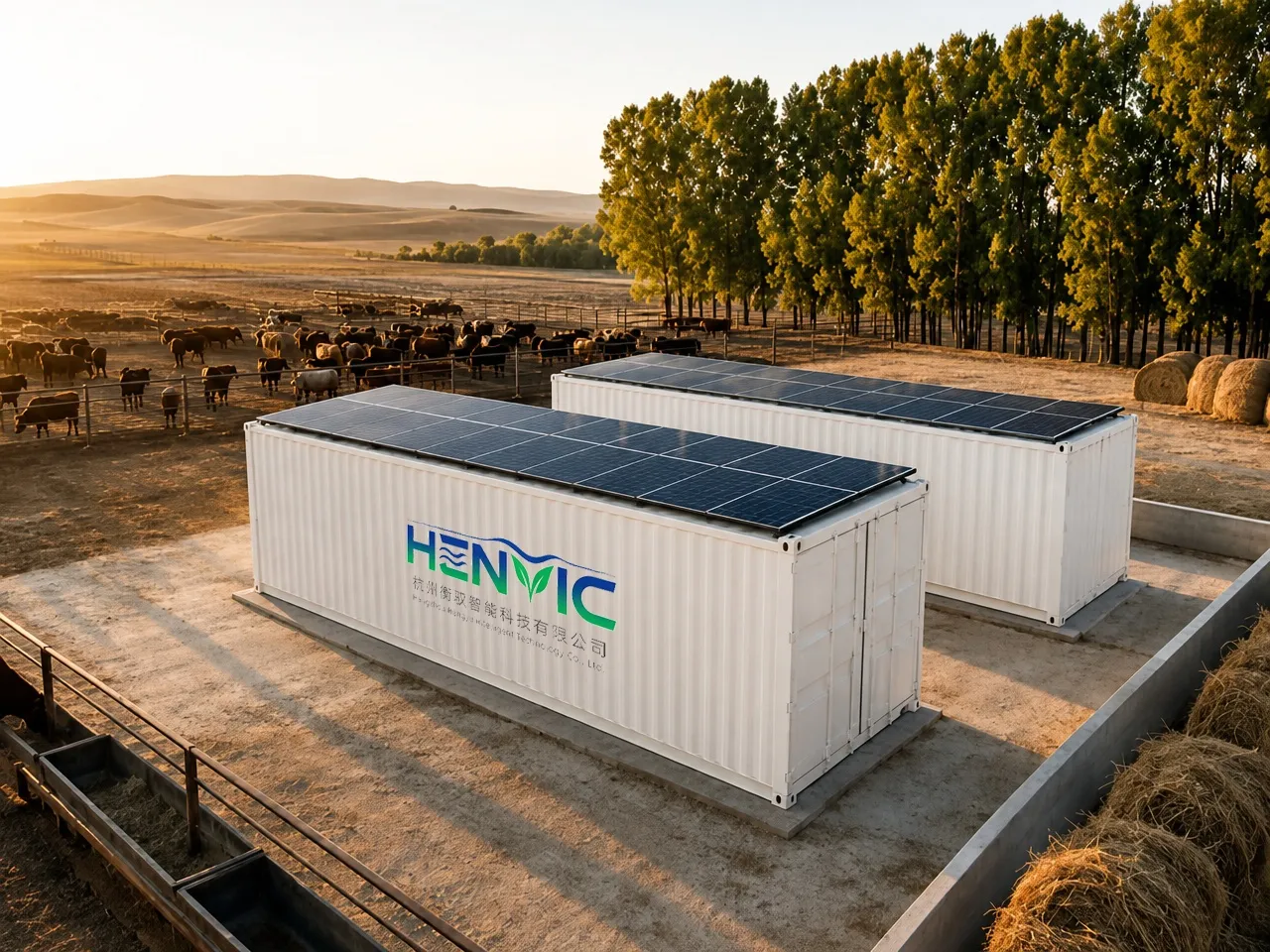
Electricity is the dominant recurring cost. Lighting and cooling together can account for 60–80 % of operating expenses. A container farm may draw 30–60 kW continuously, so siting in a low-tariff or renewable-rich grid materially changes the business case.
Capital cost for a turnkey leafy green container ranges from roughly
60
,
000
𝑡
𝑜
𝑜
𝑣
𝑒
𝑟
150,000 depending on automation, tier count, and lighting quality.
Yield and price. A well-run unit can produce several hundred to a few thousand heads of lettuce per week, or a comparable mass of herbs and microgreens. Selling into restaurants, grocers, and subscription channels commands premium prices that commodity field production cannot match.
The real constraints are economic, not technical. The technology works reliably; profitability depends on cheap power, premium local pricing, and high utilization. Competing head-on with field-grown commodity lettuce on price is generally not viable.
Sustainability and Circularity
Container leafy green production uses 90–95 % less water than conventional field agriculture because recirculating hydroponics recovers nearly all applied water. The absence of soil means no soil erosion, minimal runoff, and no agricultural pesticide drift. Because the container can sit next to its market, food miles collapse and supply chains shorten. The main environmental cost is electricity, which is why renewable-powered siting is the central sustainability lever.
Conclusion
Container farm leafy green technology is the most commercially mature branch of controlled-environment agriculture, combining a sealed shipping container, multi-tier hydroponics, tunable LED lighting, and precision climate and nutrient control. Its strength is consistency: identical, clean, pesticide-free greens grown 365 days a year, anywhere. Its discipline is energy management and unit economics. For urban farms, regional food systems, and entrepreneurs seeking a compact, scalable production platform, leafy greens remain the crop that best fits the container model — fast, high-value, and technically proven.