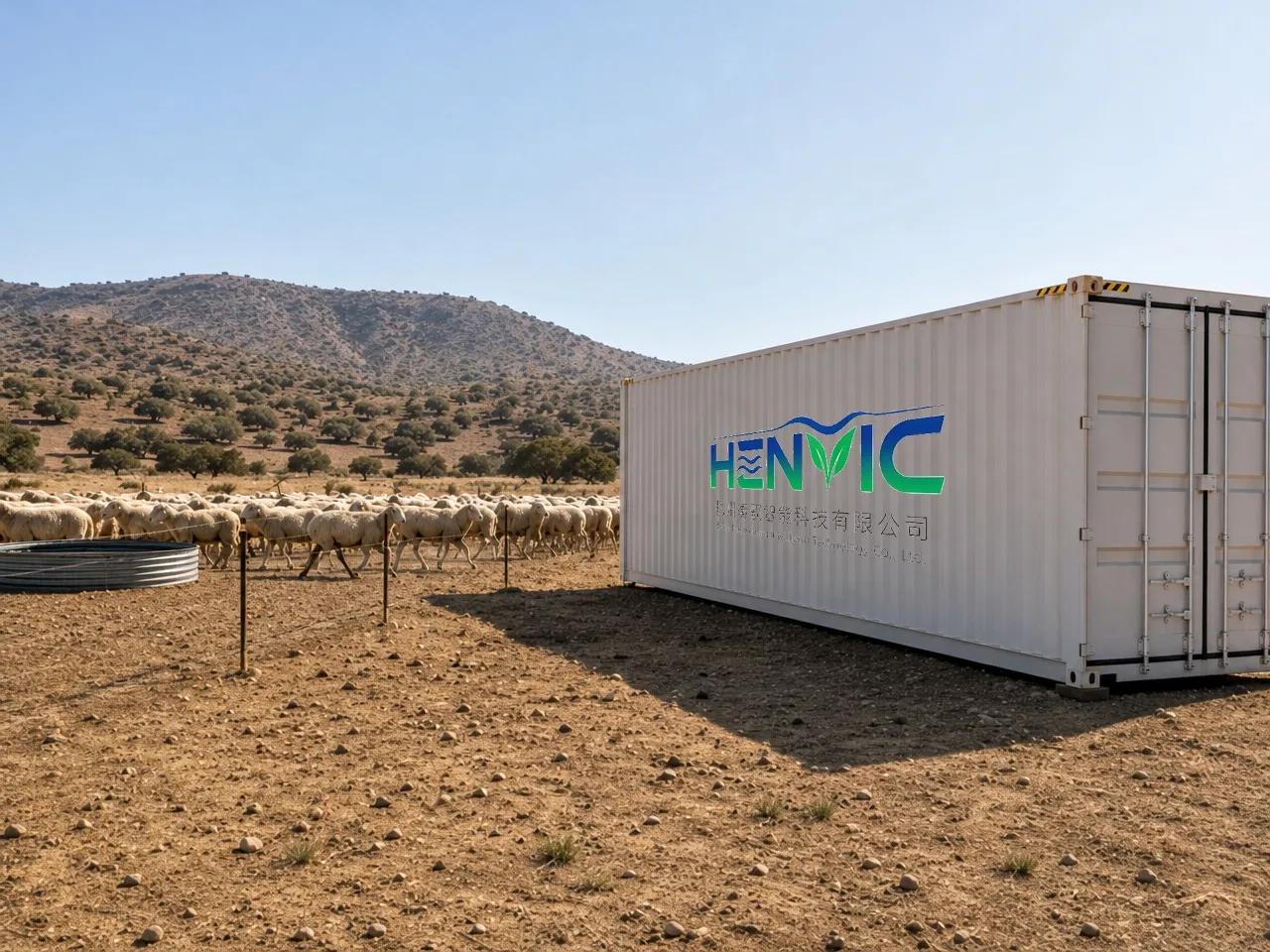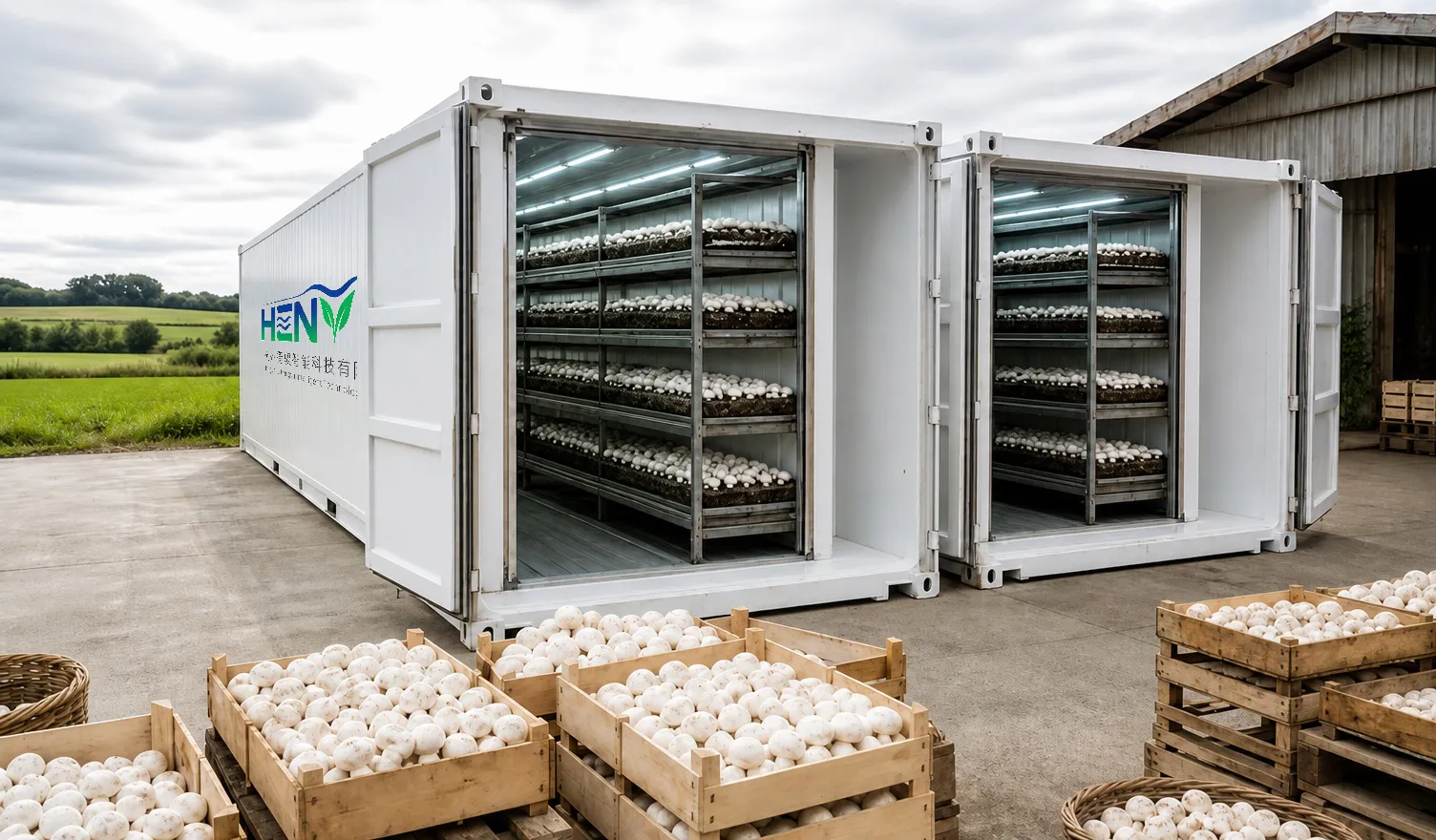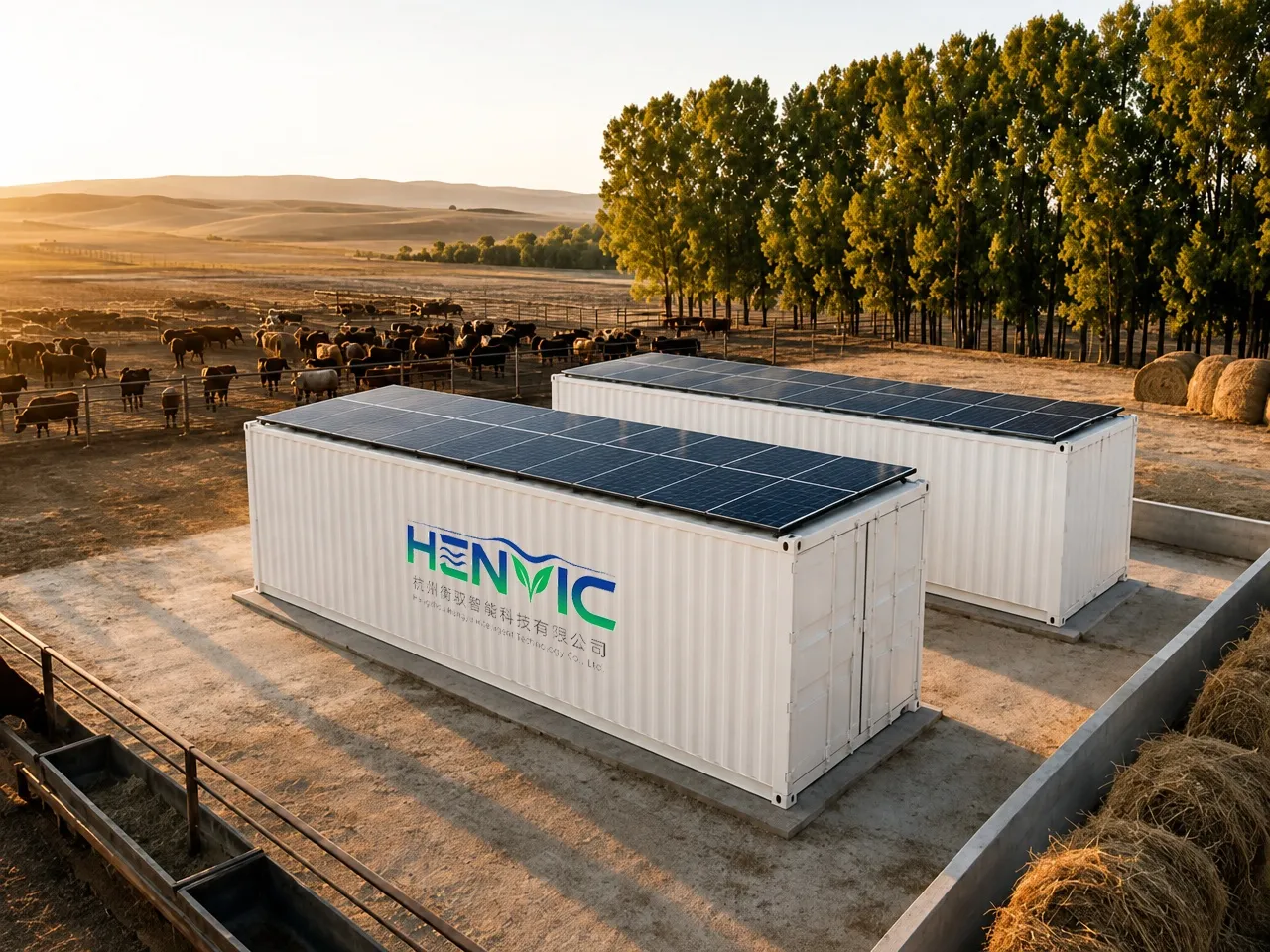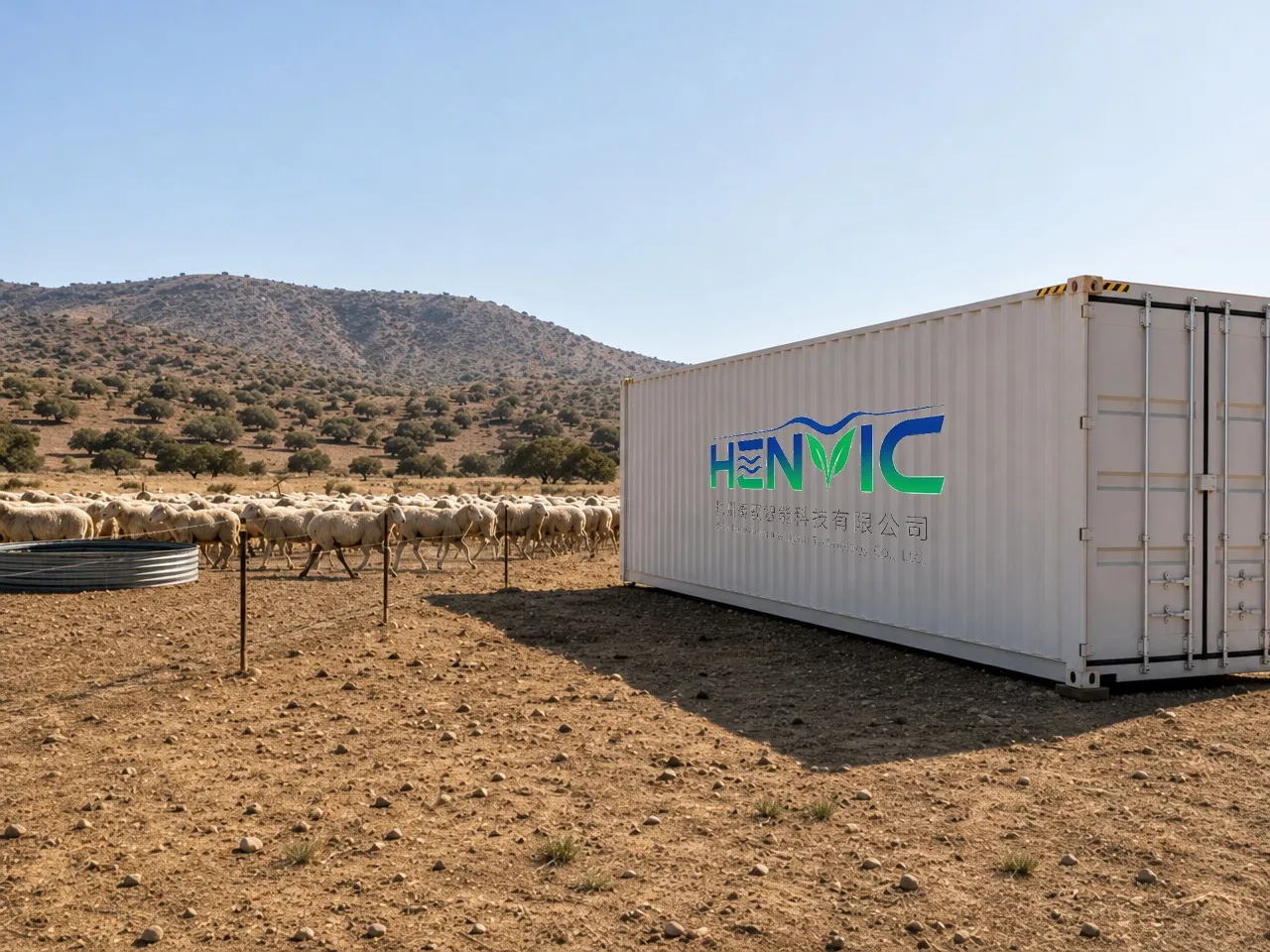
Agriculture has always been a negotiation with the weather, and for most of history the weather has held the stronger hand. A late frost, a heat dome, a dry month, hail on the wrong afternoon—any one can erase a season's work. What has changed is not that weather is unpredictable; it always was. What has changed is the frequency. Events once rare enough to plan around have become recurring features of the growing calendar, and the farmers absorbing those shocks are usually the ones with the least capacity to absorb them. A container farm's claim is narrower than it first sounds: it does not stop extreme weather. It moves the crop out of its path.
The damage comes from variance, not averages
Reading climate risk as a trend toward warmer averages misidentifies the threat. The damage arrives through variance—through swings that break the assumptions embedded in every field operation.
A crop calendar is a set of expectations. This variety, planted on this date, will see roughly this temperature range and this much water, and will be ready in this window. Extreme weather breaks the expectations rather than the averages. An unseasonal heat spike during flowering can sterilise pollen and cut fruit set. A warm winter fails to deliver the chilling hours that perennial crops need to break dormancy. A cold snap after an early warm spell kills buds that had already opened. Heavy rain saturates soil, drowns roots and spreads fungal disease; the drought that follows weeks later does the opposite.
Leafy greens are especially exposed. They are shallow-rooted and thin-leaved, sensitive to both heat stress and waterlogging, and quick to bolt when temperatures spike. A single heatwave can turn a field of lettuce bitter and unsellable within days. The problem is not that the mean is shifting. It is that the field has no buffer against the extremes.
A sealed box is a buffer by construction
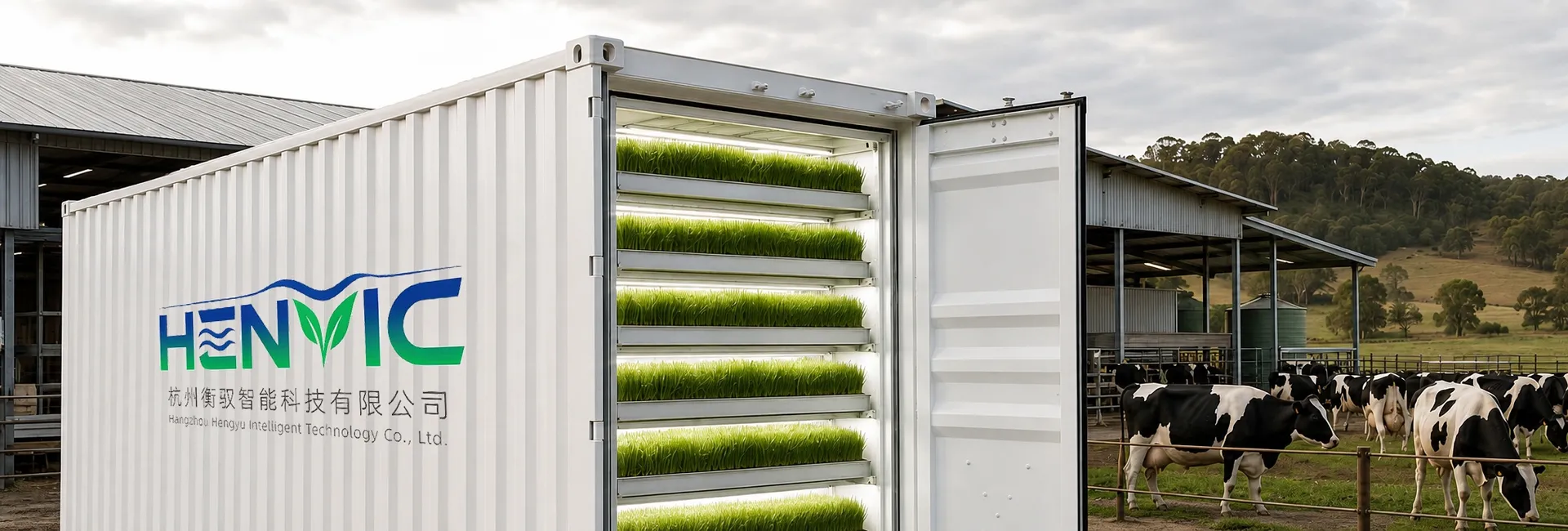
A container farm's answer is to remove the crop from the variable system altogether. The box is sealed and actively controlled, and its defining property is that the weather outside is largely irrelevant to what happens inside.
Temperature is held within a narrow band regardless of the heat or cold outside. Humidity is regulated, which suppresses the fungal diseases that wet weather invites. Water arrives through a recirculating nutrient solution rather than through rainfall, so supply is measured in litres rather than in seasons. Light comes from LEDs on a fixed schedule, so day length and cloud cover stop being variables. Air enters through filtration, which keeps insect pressure and airborne spores outside the box.
The result is a growing environment whose inputs are all metered. A heatwave becomes a higher ambient temperature against which the cooling system works a little harder—not a crop failure. A hailstorm becomes noise on the roof. The grower's exposure shifts from the weather to the reliability of power and the condition of the equipment, which are, crucially, things that can be maintained, monitored and insured.
That shift in exposure is the entire value proposition, and it is worth stating precisely. The container does not make agriculture safe. It converts an unmanageable risk into a manageable one.
Where the calculus is most favourable
The case for container farming as climate adaptation is not uniform. It is strongest in specific situations, and being honest about which ones is more useful than treating the technology as a universal response.
Regions with acute seasonal failure windows. Where a specific hazard reliably destroys a specific crop window—a monsoon that floods fields, a summer heat period that makes open-field leafy production impossible—a container captures value not by beating open-field costs but by producing when open-field cannot. During that window the market price for fresh greens rises, and the box is the only local source.
Small island states and remote communities. These face a compound problem: high import dependence, long and fragile supply chains, and weather events that disrupt shipping. A container farm does not replace bulk staple imports, but it can supply perishable greens—the category most damaged by delayed shipments and most expensive to airfreight. The value here is measured in supply security, not in cost per kilogram.
Disaster response and humanitarian settings. When infrastructure collapses, the bottleneck is usually perishable nutrition. A container can be delivered, connected to power and water, and producing within weeks. It arrives as equipment rather than as a construction project, which matters when there is no functioning construction sector on site.
Cities with constrained and unreliable hinterlands. Where a metropolitan area depends on a distant growing region, a container at the edge of the city provides a short-chain source that is insulated from the transport disruption that accompanies regional weather events.
In each case the container is not competing on the cost of a head of lettuce. It is competing against the absence of supply.
What the box cannot do
Honesty about limitations is what makes the argument credible, and there are several that matter.
The container does not create water. It uses far less of it than open-field irrigation, but it needs a reliable supply and, in many designs, water quality suitable for recirculation. In a drought, the box draws on the same strained resource as everyone else.
It does not create power. A sealed, lit, climate-controlled box is an electricity consumer, and its resilience is only as good as the grid or the generator behind it. In a disaster scenario, the container's survival depends on a power supply that the surrounding community may not have. This is not a minor footnote: it means the technology's adaptation value is contingent on energy infrastructure, and in the most extreme scenarios that is precisely the thing that fails.
It does not solve staple calories. Leafy greens, herbs and small-stature vegetables are the natural products of a container. Wheat, rice and maize are not, and no container strategy will substitute for field-scale grain production. The technology addresses the perishable, high-value, quick-cycle part of the food system, which is exactly the part most sensitive to weather. That is a meaningful niche. It is not a food security strategy on its own.
And it does not escape the weather entirely. The box still sits in the weather. Extreme heat raises the cooling load and can overwhelm the refrigeration system if it is undersized. Storms can damage the shell, flood the site, or cut the connection to the grid. The container moves the crop out of the weather's path; it does not move the business out of the storm's way.
The economics of resilience
Here lies the real difficulty, and it is an economic one rather than a technical one.
Resilience is a benefit that is only realised when the bad event happens, but the cost is paid every day. A container farm's electricity, labour, depreciation and consumables accrue continuously, whether or not the weather outside is hostile. In a normal year, a well-run open-field operation will produce the same crop at a lower cost, and the container's resilience premium buys nothing.
This means the container's climate-adaptation case cannot be made on average cost. It has to be made on the value of continuity—on the price customers will pay for guaranteed supply, on the losses avoided when the field fails, on the insurance value of not depending on a single vulnerable region. Those are real benefits, but they are harder to see on a spreadsheet than a cost per kilogram, and they are the ones most often omitted from a business plan.
There is also a timing asymmetry. Climate volatility is increasing, so the frequency with which the resilience premium pays off is rising. But the capital must be committed now, against a future whose worst years cannot be dated in advance. A container purchased as adaptation is, in effect, an option on continued supply. Like all options, it has a cost and it may expire unexercised.
Positioning the technology correctly
The most defensible framing of container farming is not as the future of agriculture or as a replacement for fields. It is as a risk-management instrument within a food system whose weather insurance has become less reliable than it used to be.
Under that framing, the design questions change. Sizing becomes a question of what reliability is worth, not what throughput is maximal. Redundancy in cooling and power becomes a resilience feature rather than an inefficiency. Site selection weighs floodplain exposure and grid reliability alongside logistics. The product mix tilts toward whatever the local field cannot produce during its worst season. And the business model—subscription, contract supply, institutional procurement—is built to capture the value of guaranteed delivery rather than to chase the lowest unit cost.
None of this makes the container a solution to climate change. It makes it a tool for operating within a climate that has already changed, in the specific places where the loss of predictability is most expensive. The crop no longer needs to negotiate with the sky. Someone still does—over the power supply, the maintenance schedule and the business model. The negotiation has not disappeared. It has been relocated to where the terms can actually be controlled.