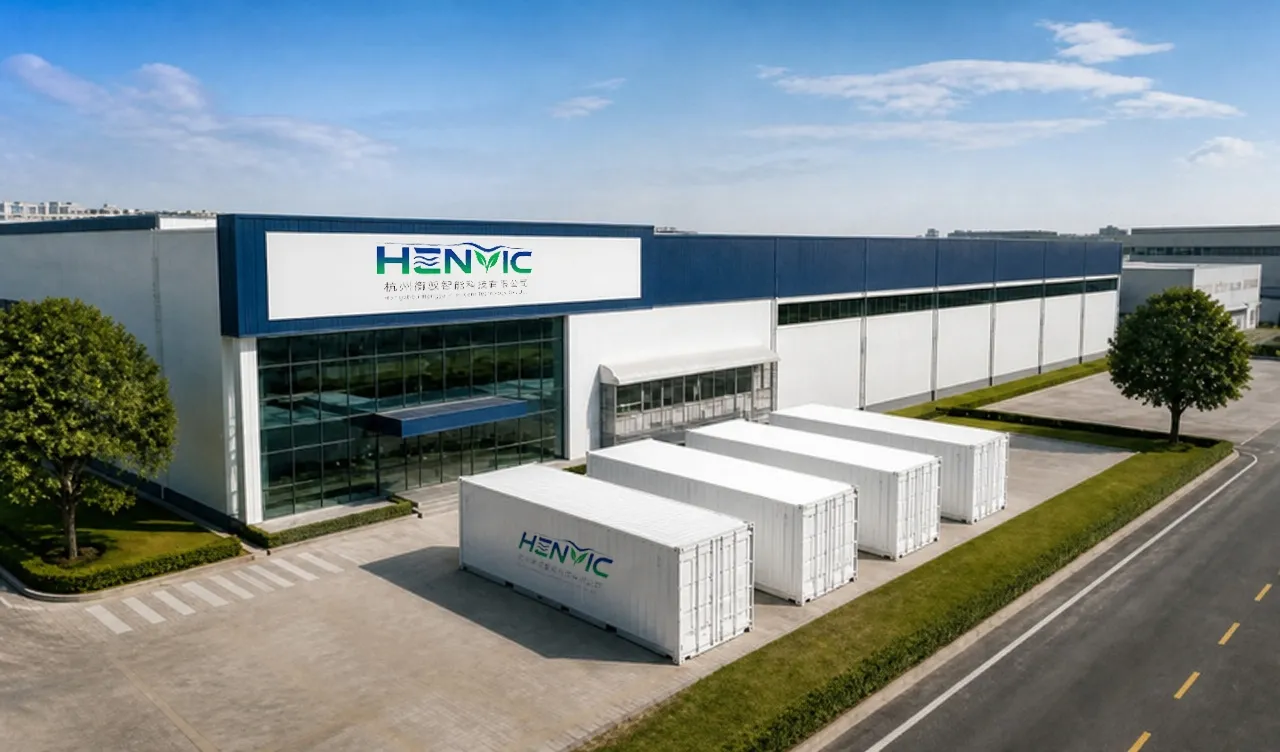
Every container farm starts the same way: as an experiment. A single box, a handful of crops, a grower learning what the parameters will tolerate. The interesting question is what happens next. Some operations never leave that stage, trapped in a pilot that proves the technology works but never proves the business does. Others find a way to turn one validated box into a network—a chain of bases, or a product sold to others. That transition, from test box to chain base, is where the business model is either built or exposed.
Why the Pilot Is Easy and the Business Is Hard
A single container is a forgiving proposition. It can be funded as research, positioned as a demonstration, or carried inside a larger company as a sustainability project. Nobody demands that one box be profitable, and its output—a few tonnes of greens a year—can be absorbed by almost any channel without disturbing the market.
Scaling removes that cushion. Two hundred boxes cannot be explained away as a pilot, and their combined output must find a real, repeatable, price-supporting demand. The failure mode of container farming is rarely technical. The equipment works. What fails is the assumption that a validated box implies a validated business. The box proves that crops can grow; it says nothing about whether anyone will pay enough for them.
So the real subject of this piece is not the technology but the four or five business models that have emerged around it, and the specific conditions under which each one holds.
Model One: The Owner-Operator
The simplest model is also the most demanding. One company owns the boxes, runs them, and sells the produce. Its economics are straightforward: revenue is produce sales, and cost is dominated by electricity, labour, depreciation and consumables.
This model lives or dies on channel selection. Selling into commodity wholesale is almost always fatal—the price of a head of lettuce in bulk markets rarely covers the energy cost per kilogram, let alone the capital. The model only works when the produce reaches buyers who pay for proximity and consistency: chefs who want the same leaf every week, premium grocers that can charge a freshness premium, subscription customers who value a predictable delivery. In those channels the container competes not on price but on attributes the field cannot match, and the margin is enough to keep the lights on.
The owner-operator model scales by adding boxes at the same site, then adding sites. Each addition is capital-intensive, and each new site starts with roughly the same learning curve unless the operating playbook has been genuinely standardised. The discipline that separates operators who scale from operators who stall is the ability to write down what works—the parameter sets, the maintenance schedules, the sales template—so that a new box is not a new experiment.
Model Two: Equipment and Turnkey Supply
The second model sells not vegetables but growing units. The company designs and manufactures the container system, then sells it as a turnkey product to a buyer who operates it locally. Revenue comes from equipment margin, or from a solution package that includes installation, commissioning, training and support.
This is a fundamentally different business, closer to industrial equipment than to agriculture. Its economics rest on manufacturing scale, engineering reliability and after-sales service, not on the price of lettuce. The appeal is that the seller is insulated from the operating risks that plague the grower—electricity prices, crop failures, channel volatility. The buyer absorbs those, in exchange for owning an asset.
The risk is equally clear. If buyers cannot make their own boxes profitable, the equipment model has a short life: bad news travels, repeat orders dry up, and the installed base becomes a liability rather than a reference. A credible turnkey supplier is therefore pushed into a role it did not initially want—helping customers succeed operationally, because the customer's success is the supplier's best marketing. The most durable players in this category treat the box as the beginning of a relationship rather than the end of a sale.
Model Three: Franchise and Managed Networks
Between owning everything and selling everything sits the franchise or managed-network model. The brand owner supplies the system, the operating playbook, the training, the supply chain and often the sales channel; local partners supply capital, premises and day-to-day labour. Revenue arrives as a combination of franchise fees, equipment sales, ongoing royalties and centralised supply.
This model tries to capture the best of both worlds: replicating quickly with other people's capital while retaining control over quality and standards. It works only when the playbook is genuinely transferable—when the growing parameters, the staffing requirements and the sales motion can be handed to a partner who is not a horticultural expert and still produce consistent results.
That is a high bar. Container farming is still an emerging discipline, and much of what makes a site successful is tacit. Franchising too early, before the operating model is stable, spreads failure as efficiently as success. The franchises that endure tend to be those launched only after several company-owned sites have run profitably for multiple years, providing a tested template rather than a hopeful one.
Model Four: Institutional and Bespoke Projects
A less visible but often more stable model serves institutions rather than markets. Universities, research institutes, agricultural agencies and large corporates commission container farms as research platforms, educational facilities, ESG demonstrations or employee amenities. Here the buyer is not purchasing produce; the buyer is purchasing capability, image or data.
The margins in this segment can be attractive because the price is set by the value of the capability, not by the wholesale price of greens. The volumes are small and episodic, but the relationships are long and the operating pressure is lower. For a young company, institutional sales can fund the development work needed to make the commercial models viable—an important, if less celebrated, role.
It is also the segment most vulnerable to shifts in sentiment. When sustainability budgets tighten or a novelty fades, project-based demand can vanish quickly, which is why operators rarely build a whole business on it.
Model Five: Retail and Hospitality Integration
A fifth pattern embeds the container directly inside a customer's operation. A supermarket chain installs a box on its roof and sells the greens a few metres below. A restaurant group grows its own herbs and microgreens. In these arrangements the farm is not a standalone business at all; it is a component of someone else's margin structure.
The economics here are indirect. The value lies in differentiation, in reduced spoilage, in the story told to customers, and in the ability to offer a product no competitor has. Because the buyer already owns the demand, the hardest problem in container farming—finding a channel—is solved in advance. The provider supplies and maintains the box, or operates it under a service contract, and the host captures the retail upside.
The through-line: replication cost
Across all five models, the same variable decides the outcome: the cost of replication.
A container farm's cost structure is unusual in that the first unit is almost always the most expensive, because it absorbs all the learning. The second unit should be cheaper, the tenth cheaper still, and the hundredth should approach the marginal cost of steel, equipment and installation. A business model is sustainable only if that decline actually happens—if the playbook, the parameters, the supply chain and the sales process genuinely transfer from site to site.
Where replication cost stays flat, container farming remains a craft: artisanal, bespoke, unscaleable, and dependent on exceptional individuals. Where replication cost falls, it becomes an industry. The technology is only the raw material for that transition; the business model is what determines whether it occurs.
What the Models Share
Three requirements appear in every viable model.
The first is a channel that pays above commodity prices. Whether the buyer is a chef, a subscription customer, an institution or a retail chain, the container farm cannot survive on the price of ordinary bulk vegetables. Every model ultimately solves the same problem—finding someone who values what the box delivers beyond its weight.
The second is electricity at a workable price. Energy is the largest operating cost, and its cost varies by a factor of two or three across markets. This single variable can move a project from viable to hopeless without any change in technology or management. Site selection is fundamentally an energy-price decision.
The third is operational discipline. Container farming rewards consistency and punishes improvisation. Crops are lost to small failures—a pump, a sensor, a missed maintenance interval—and the businesses that last are the ones that turn operations into a routine, not a series of heroic recoveries.
The Shape of the Industry
The container farm industry is unlikely to resolve into a single dominant model. It is more likely to stratify: equipment suppliers selling systems, a small number of large operators running chains of company-owned sites in favourable markets, franchise networks in regions where local capital and local partners make sense, and a long tail of institutional and integrated installations that never appear in the market data at all.
What separates the ones that scale from the ones that stay experiments is rarely the box. It is whether the company understood, early enough, that it was not in the business of growing lettuce—it was in the business of replicating a validated unit of production, and selling what came out of it to someone willing to pay for more than a vegetable. From test box to chain base is not a technological journey. It is a business-model one, and most of the casualties along the way fall for reasons that have nothing to do with the equipment.